



















































“You know your shoes don’t match your suit, right?”, the words broke my concentration and I looked up at Geeta , staring at my shoes. I half-nodded, and went back to my papers, studying for my interview that afternoon. “That doesn’t look professional. You were meant to bring matching clothes & shoes from India.” Geeta continued in a more accusatory tone. Not knowing how to respond, I kept my focus on revising the concepts for my first software job interview in the US. Taking my silence as a disregard of her experience as an HR manager, Geeta pressed on. “I think it’s better you call that interview off today, and go buy some matching shoes. Your professional outfit matters in the US.”
“What matters isn’t there”, I responded, pointing at my shoes. “What matters is here”- I pointed at my head.
It was April 4th 2000. I had been in America for a whole 4 days, arriving on April Fool’s Day, a young woman full of hope and impossible dreams. The prior 7 years of my life – as well as my sister’s who was still in India at the time – had spent in a world where we were misunderstood, misjudged, mismatched.
—
In America, there is a tradition of rebellion; rebels with a cause, rebels without a cause, rebels at heart, born rebels, young rebels, American rebels. I remember the famous 1997 ad from Apple;
“Here’s to the crazy ones. The misfits. The rebels. The troublemakers.
The round pegs in the square holes.
The ones who see things differently.”
Reading it in 1997 India, I felt bemused by a culture that celebrates its rebels. India, frowned upon them -they were criticized, constrained and crushed. To be a misfit or a mismatch was to suffer daily heartbreak and constant pushback.
Which was a problem for me and my sister. Because we seem to be mismatched with those around us in all sorts of way.
Our mom had passed away when we were young teenagers, leaving us in a mother-less family. We had never come across any other family with a single parent. We were mismatched.
Our father remedied that problem by getting remarried. We had never known of another family with a step-mother. We were mismatched.
In urban India of the 1990s, women rarely had jobs. But my sister and I had seen what the lack of a paycheck had done to our mother, robbing her of her voice and eventually of her life. We were determined to have not just jobs but careers. We were mismatched.
As we got older, our father expected to find us suitable grooms and organize arranged marriages for us. We refused to be commodities and denounced the whole arranged marriage, horoscopes, dowry circus. Mismatched.
At every step, we proved ourselves to be misfits, rebels, troublemakers. In return we endured our father’s incessant tirades, our stepmother’s relentless manipulations, and the extended family’s – and neighbors’- constant whispers.
It was as though we walked around with a scarlet “M” stamped on our foreheads – you know “M” for Mismatched.
Finally my sister and I decided to move out. “Moving out”; such a common phrase in the west, is another thing we never came across in India. In India, girls didn’t “move out”—they moved from their father’s house to their husband’s. Leaving meant risk in every direction: the ever-present dangers women faced, the stigma of being labeled “damaged goods,” and the reality of surviving on our own with almost nothing. The odds of crashing and burning were high, logic said to stay in the safety of our father’s home. But logic doesn’t make a life.
The day we left our father’s home, we had about 1,00,000 Indian Rupee in our savings account, that is about 2000 Dollars. As per our father we were throwing ourselves in the abyss. But my sister and I were guided by a faith that went beyond sight.
Nine months later, I was in the U.S., brought by a placement company that had trained me as a software engineer. The previous months, we had worked 18, 20, sometimes 24-hour days – I remember the sun setting and rising through the glass windows of our office. We were determined to make something of our lives, not to crash and burn, and to prove those who believed girls couldn’t be engineers wrong. Of the 200 odd trainees, only two were girls – my sister and I. Again, mismatched.
When our H-1B visas came through, we spent every rupee we had in our savings account on the essentials—suitcases, a coat, a work suit, shoes. We did the best we could with what we had. My shoes and suit were mismatched and I knew that.
So when Geeta made that comment – and wouldn’t let go- she meant well. She just had no idea what it had taken for me to get there. To her, it was about my shoes; to me, my entire existence. And I couldn’t afford a new pair – at least not until I cracked that interview and got the job.
By the time I had gone through 3 rounds of grueling interviews at the multinational corporation later that day, I had forgotten all about my shoes. Finally I was told I was hired and could begin work next week.
Before heading home, I stopped at the restroom. I opened the door and found myself in a plush space with floor to ceiling mirror on the walls. It was then that I noticed my shoes – and smiled. They were mismatched.
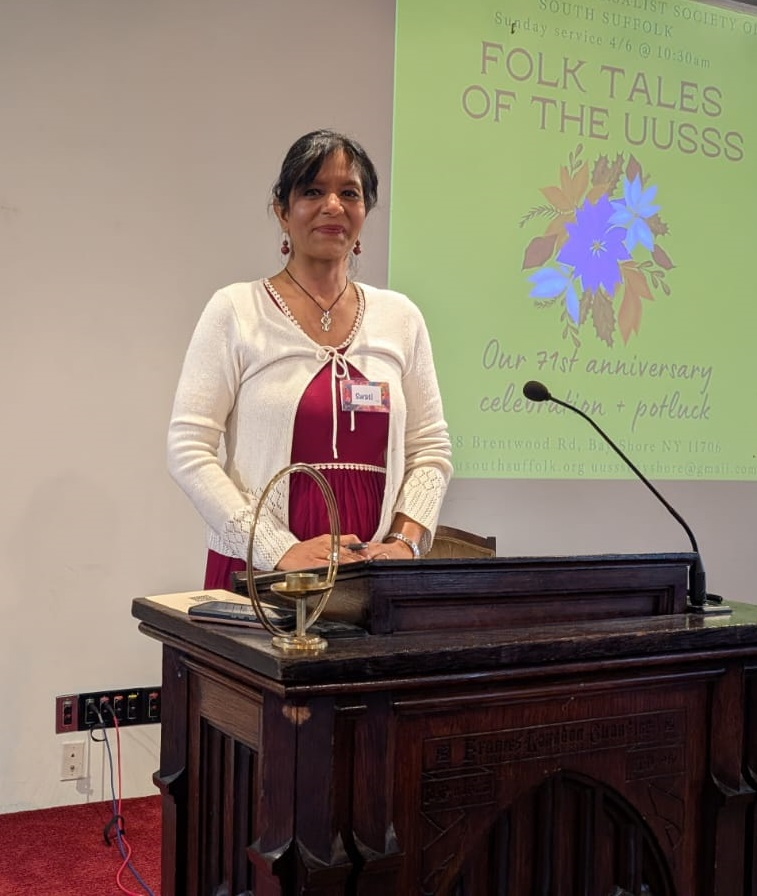
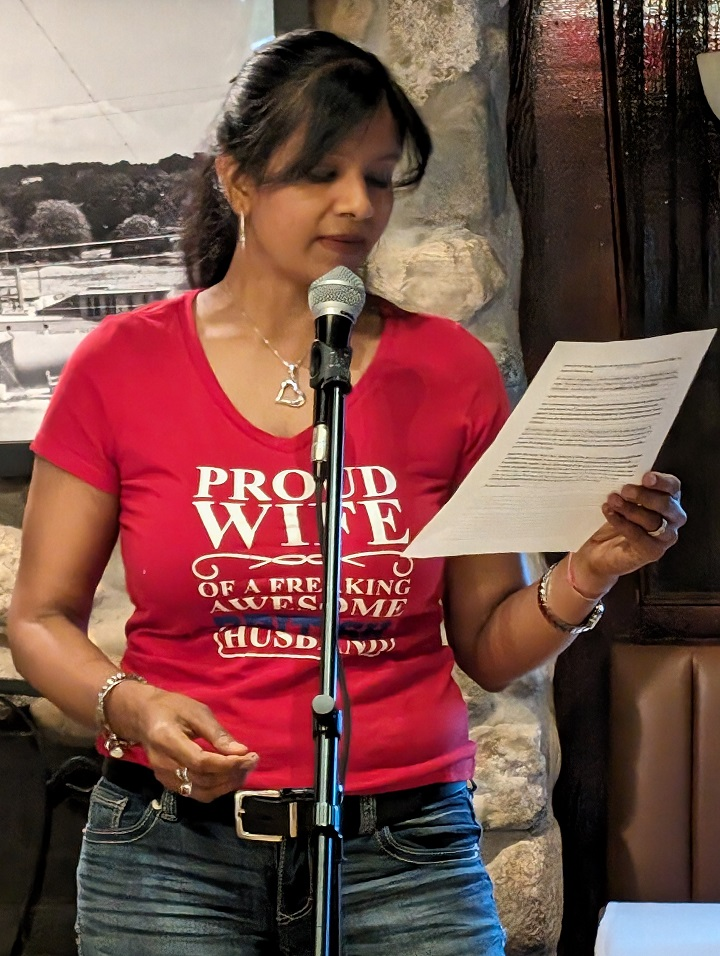
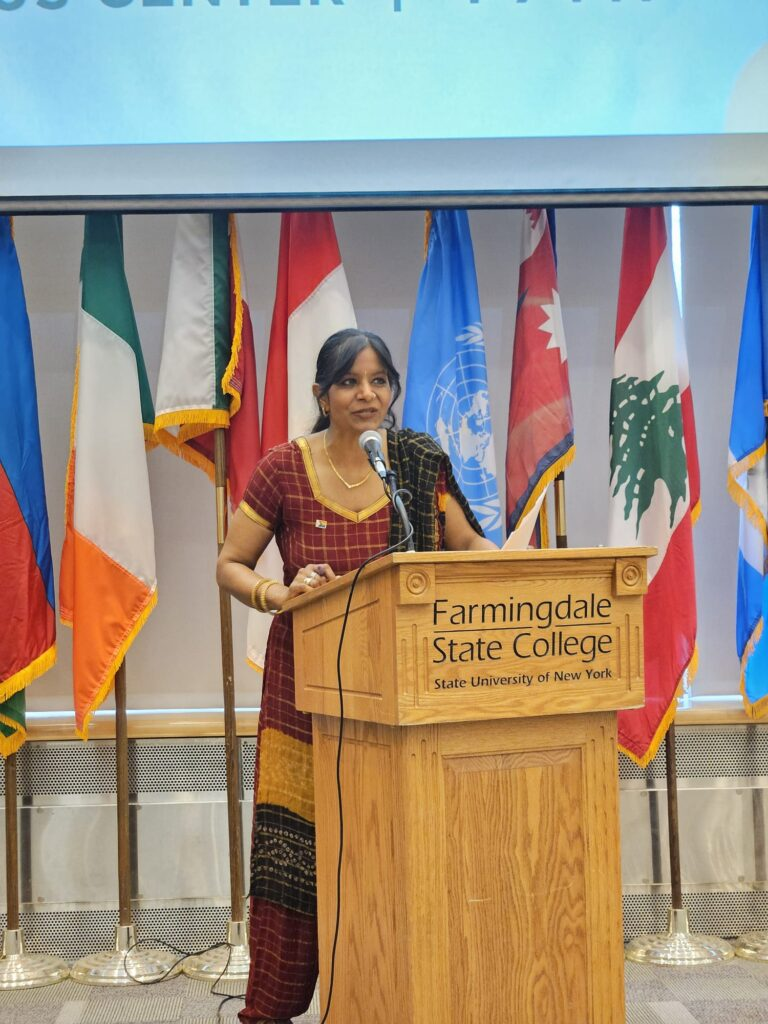
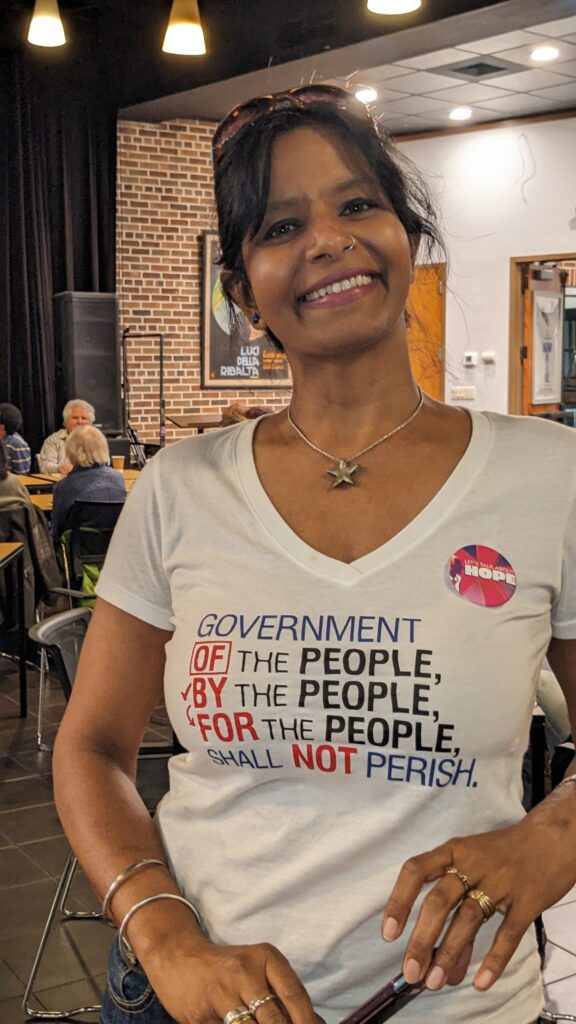
Swati Srivastava is an immigrant and a multi award-winning writer, director, and voiceover artist. A filmmaker & storyteller, Swati turns ideas into experience. She it the Co-Chair for Braver Angels Long Island and a trained facilitator for Crossing Party Lines moderating conversations that bring people together across their political divides. Swati is also an environmentalist and lives in a Net Zero Energy home with her husband. She can be reached via Linkedin and swati@TiredAndBeatup.com