


























The season of lights is upon us. For Indians, Diwali celebrates the triumph of light over darkness. So it would make sense to share a Diwali story at this “concert of light,” but instead, I’ll tell you about another Indian festival—and the light it has brought to my life. It’s called Rakhi, or Raksha Bandhan, from the Sanskrit word “Raksha”, meaning “protection.”
Like all things Indian, there are many legends around the origin of Rakhi. One of the most beloved comes from the epic Mahabharata.
One day, Lord Krishna injured his finger — and not just any finger, but the index finger of his right hand, the one that held the divine discuss called the Sudarshan Chakra, that spinning, fiery disc of righteousness and divine vision. So when he cut it, it wasn’t a small thing. Draupadi, the young queen of the Pandavas and Krishna’s dear friend, saw this. Without a moment’s hesitation, she tore a strip from her expensive sari and tied it around his bleeding finger. That small act of care created a sacred bond between them. Draupadi became Krishna’s sister, and Krishna, moved by her compassion and generosity, promised, “I will always protect you.” Years later, when the enemies of the Pandavas tried to strip Draupadi of her dignity in the royal court, Krishna kept his vow — her sari became endless.
So, a simple thread transformed friendship into a sacred sibling-like relationship rooted in protection and devotion. That vow became what we now know as Raksha Bandhan — literally, “the protection thread.” Across India, on Rakhi day that falls in August, sisters by birth or by bond tie a thread of silk around their brothers’ wrists; a thread that carries love and trust. And in return, the brothers pledge to protect and uphold their sisters.
—
My sister and I grew up without a brother. In a patriarchal culture where sons were prized, it was remarkable that our parents never tried for a third child in hopes of a son. Instead they educated us and instilled in us the same drive & ambition usually reserved for boys. When Rakhi came, my sister and I, without anyone’s prompting, tied the thread on each other’ wrists, promising to be there for each other through thick and thin.
Promises that were deeply tested when our mother passed away leaving her two teenage daughters with their hapless father who in his panic did what fathers from time immemorial have done – brought home a fairy-tale step mother. My sister & I went from Glinda the good witch’s warm domain to the dark side of Oz, where broomsticks ruled and kindness was a myth. Indeed our step mother seemed hell-bent to win the Oscar of wicked step mothers!
There is not a single good thing I remember about our time with her — except – that she had a brother, and her brother had a son: a sweet little boy with bright eyes and a brilliant smile who visited us during holidays and festivals, including on Rakhi.
Now because his father was my step-mother’s brother, she would tie a Rakhi thread on his father’s wrist as was customary. And because this little boy was now our step-brother, my sister and I did the same. He was much younger than us, this sweet little boy with bright eyes and a brilliant smile, and the thought that some day he will grow up to pay the other side of this scared debt was unfathomable to us then.
A few years later, my sister and I moved to the U.S. and began new lives. But because we were our mother’s daughters — emotional, loyal, and bound by our word — so every year we mailed two Rakhis from America to India to our stepmother to pass on to that sweet little boy, our brother. And because our step-mother was still hell-bent to win the Oscars of wicked step mothers, she hid our Rakhis from this boy and his family. But because this little boy himself had a wise mother, she came to find out about these unsent Rakhis and told this boy about his sisters who had kept their word, their side of the sacred debt.
Years passed. And then came the day when my sister got grievously ill, and within months, she was gone. I spent her final days in our father’s home in India. When she died, I felt I was swallowed whole by darkness, my grief so thick it left me gasping for breath. Surrounded by “family” who could neither grasp nor bear my pain, there was not a shoulder in sight that dared bear the weight of my despair — none save one. For I found standing beside me, a young man with bright eyes and a brilliant smile — the sweet little boy turned poet, writer, an old soul. He too had lost much of his family. His love and loyalty ran deep, and he leaned his very being against my sorrow, daring, willing, begging to share my grief – a brother ready to pay HIS sacred debt.
The journey we undertook in the ensuing years — his in India, mine in the U.S. — bound by the common thread of loss, love, and a longing to share life together, could itself fill the pages of a book. Two years ago, my brother finally arrived on what I like to call my side of the ocean — in America’s own sibling, Canada. And today, as we celebrate our very first Diwali together, I think of the old saying: one candle can banish years of darkness. This Diwali, that candle is OURS — a small flame of love, held together by a sacred bond, that has endured time, loss, and distance, and still shines bright enough for both of us.
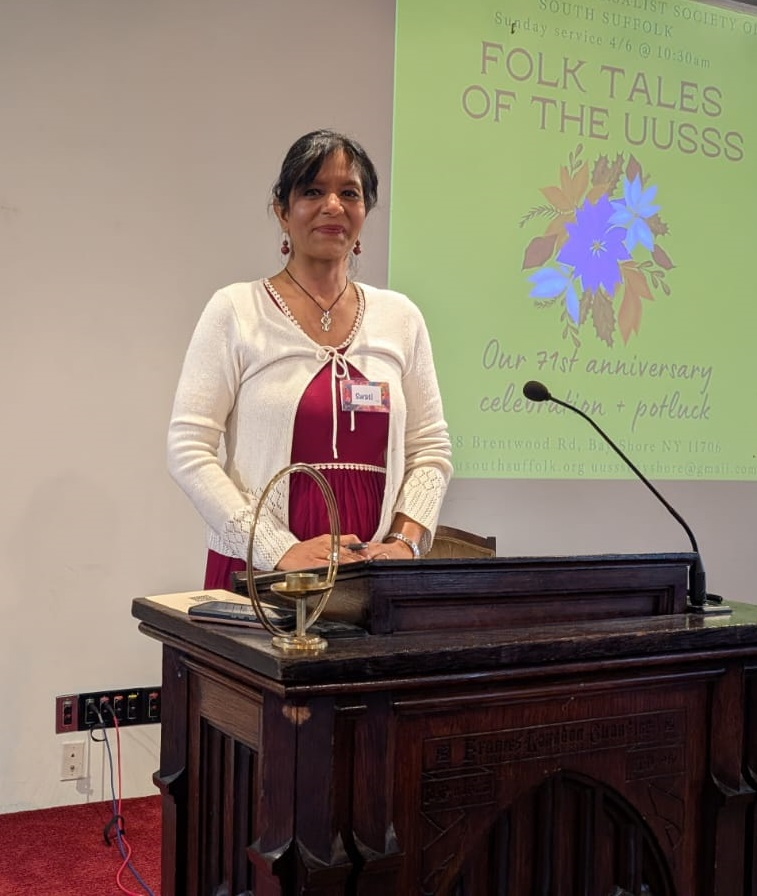
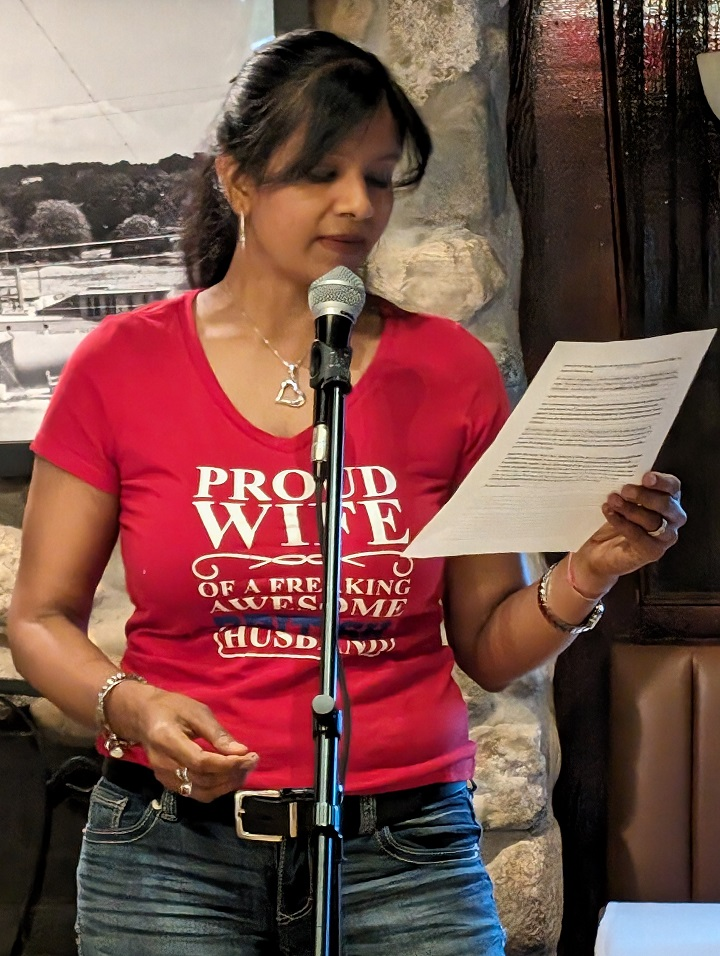
Swati Srivastava is an immigrant and a multi award-winning writer, director, and voiceover artist. A filmmaker & storyteller, Swati turns ideas into experience. She is also a trained facilitator for Crossing Party Lines moderating conversations that bring people together across their political divides. Swati is also an environmentalist and lives in a Net Zero Energy home with her husband. She can be reached via Linkedin and swati@TiredAndBeatup.com